Expert women’s health physiotherapy in Surrey
At Mint Wellbeing, our specialist women’s health physiotherapists support a wide range of pelvic and women’s health concerns. Whether your symptoms are new or longstanding, we can help you feel more comfortable, confident and in control of your body.
Specialist care for every chapter of a woman's life
Our Women’s Health Physiotherapists support women through pregnancy, postnatal recovery, menopause and a range of pelvic health concerns. This can include pelvic pain, bladder and bowel symptoms, prolapse, pelvic floor concerns and pain during sex.
At our Esher clinic, you’ll have a dedicated appointment to discuss your symptoms, understand your options and work towards achieving the things that matter to you.
The time and space to talk
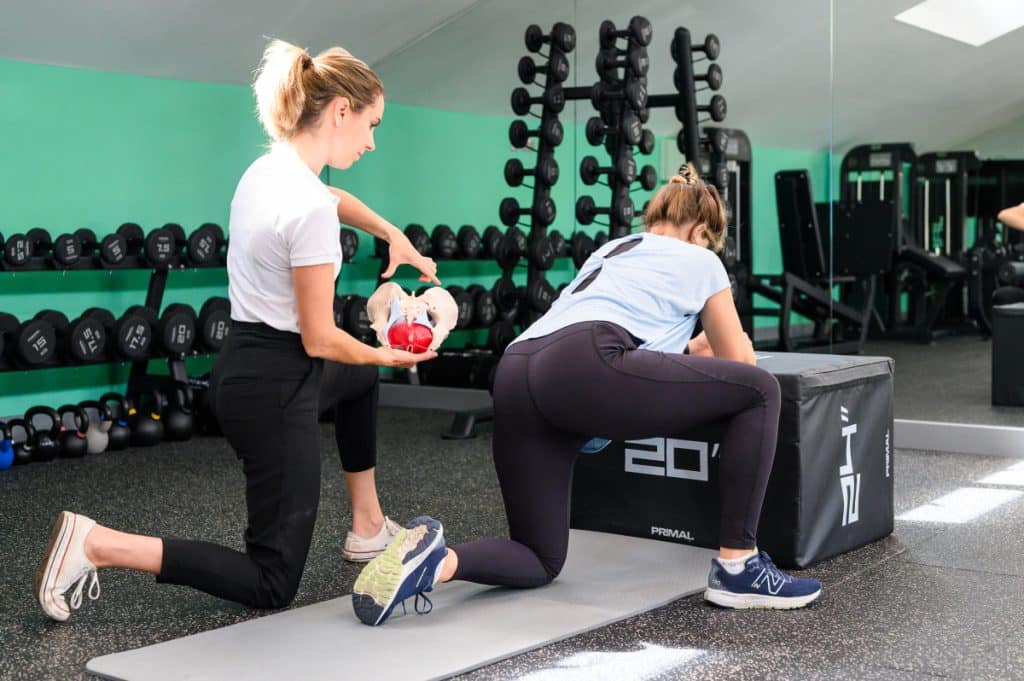
Women’s health symptoms can be difficult or embarrassing to discuss, and some women live with them for years without knowing treatment could help. At Mint Wellbeing, we provide a supportive space where you can talk openly without feeling rushed or judged.
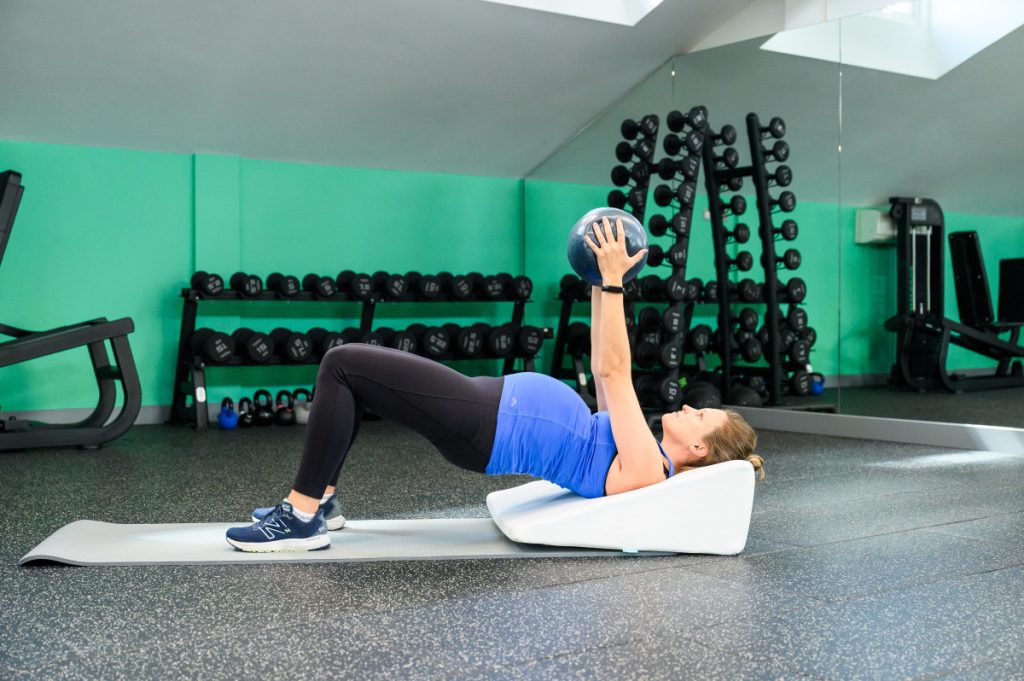
Whether you want to return to running after having a baby, manage bladder symptoms, build strength during menopause or understand pelvic pain, we’ll listen to your concerns and create a treatment plan around your needs and goals. Where appropriate, we can also work with other healthcare professionals to support joined-up care.
Explore our Women’s Health Services
Our women’s health physiotherapy in Esher includes Mummy MOT, bladder and bowel support, urogynae conditions and pregnancy-related aches and pains.
Meet our Esher Women’s Health Physiotherapy team
Jenny Fielding and Emma McCarney provide specialist support for a range of women’s and pelvic health concerns.
With experience across pregnancy, postnatal recovery, menopause and pelvic health, they take a personalised approach to every appointment.
Specialist Women's Health Physiotherapist
Women's Health Physiotherapist
What to expect from your women’s health physiotherapy appointment
Your first appointment is a chance to talk through your symptoms, health history, lifestyle and goals.
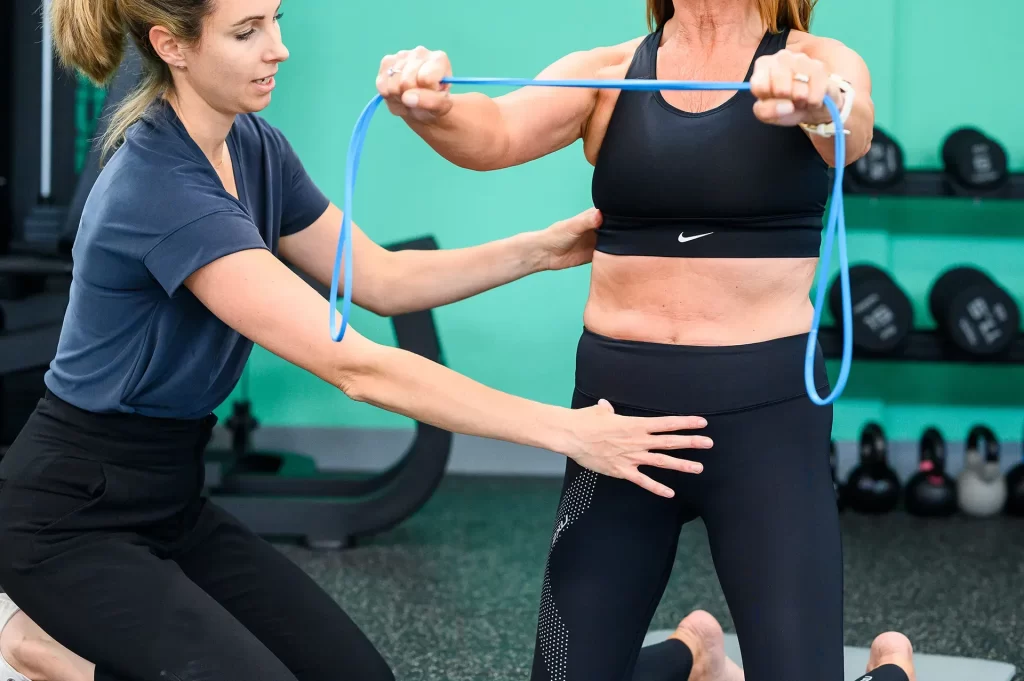
From there, your physiotherapist will carry out an assessment tailored to your symptoms. This may involve looking at your movement, breathing, abdominal wall or pelvic floor. An internal examination is often helpful but never automatic. If it’s recommended, your physiotherapist will explain why and ask for your consent first.
They’ll then talk you through what they’ve found and the treatment and rehabilitation options that suit you best. Treatment might include exercises, movement advice, hands-on techniques, education or practical strategies for managing your symptoms day to day.
FAQs
What is prenatal physiotherapy?
Prenatal physiotherapy involves assessment and support throughout pregnancy, helping you manage physical changes and prepare your body for birth.
Your physiotherapist can assess areas such as the pelvic floor and abdominal muscles, provide advice around appropriate exercise and help address pregnancy-related musculoskeletal pain.
We can also provide education around techniques such as perineal massage to help you prepare for childbirth.
What is included in a post natal physiotherapy check up?
A postnatal check-up is designed to assess your recovery following birth and help you understand your body and how to return to the activities that matter to you.
Your appointment may include:
- A full history of your pregnancies, births, recovery, health conditions, menstruation and previous surgery
- Discussion around your pelvic floor, urination, bowel function, sexual intercourse and any pain or discomfort
- Discussion around your symptoms, challenges and goals
- Assessment of your posture and pelvic position
- Assessment of your spine, hips, upper back and pelvis
- An internal pelvic floor examination, where appropriate and with your full consent
- Assessment of your abdominal wall for diastasis
- Ultrasound assessment of the abdominal wall where appropriate
- Assessment and advice for C-section or perineal scars
- An individualised plan for your pelvic floor, abdominal wall and return to your goals
Your physiotherapist will discuss your findings with you and explain whether further appointments would be beneficial.
What is a pelvic floor examination and do I have to have one?
A pelvic floor examination is an assessment used by qualified healthcare professionals to assess the pelvic floor muscles, vaginal wall and pelvic organs.
An internal examination may help your physiotherapist understand muscle strength, tone, pain, tightness, prolapse and other factors affecting your symptoms.
Your therapist will explain the examination fully, discuss why it may be useful and talk through any alternatives. You will always be asked for your consent and you can decline the examination or ask for it to stop at any time.
What is a standing pelvic floor examination?
Many women notice their pelvic floor symptoms when they are upright and active, such as when coughing, jumping, running or lifting weights.
A standing pelvic floor assessment can help your physiotherapist understand how your pelvic floor functions against gravity and during movement.
It can also help assess coordination and your ability to manage load through the pelvic floor, allowing your rehabilitation to become more specific to the activities you want to return to.
A lying assessment will generally be carried out first.
Can I still have a pelvic floor check on my period?
Yes. A pelvic floor examination can still take place during menstruation if you are comfortable.
In fact, some women notice that their symptoms are more pronounced at certain stages of their menstrual cycle, which can provide useful information during your assessment.
If you have a particularly heavy flow or would prefer not to have an internal examination during your period, your appointment can be adapted or rearranged.
Do I need a pelvic floor exam after C-section or just vaginal birth?
Women can experience pelvic floor symptoms following a caesarean birth as well as following a vaginal birth.
Pregnancy itself can place significant strain on the pelvic floor, while hormonal and muscular changes can also affect pelvic floor function after birth.
Where appropriate, a pelvic floor examination can help assess your recovery and guide your treatment. This will always be carried out with your full consent.
I have urinary leaking and heaviness but I am only 3 weeks postpartum - can I come to Physiotherapy?
Absolutely. While some symptoms can be common during the first few weeks after birth, you do not have to simply put up with them.
We can provide an early postnatal assessment, education and guidance and help identify whether any further support is needed.
A full internal examination would generally not be carried out until six weeks postnatal, but your physiotherapist can assess you externally and begin an appropriate treatment programme sooner.
I am 4 years postpartum but still have symptoms - can I have a postnatal check?
Yes.
Whether you are six weeks, six months or several years postnatal, a postnatal check can still be appropriate.
You may be experiencing ongoing symptoms, feeling weak or unsure how to return to exercise. You may simply want to better understand how your body has changed since having a baby.
Our specialist women’s health physiotherapy team can help you understand what is happening and create a plan around your goals.
My doctor told me I can return to all exercise and running at 6 weeks - is that true?
The six-week postnatal check is not necessarily a sign-off for intense exercise.
The medical check generally assesses whether there is a medical reason why you should not return to activity. However, every pregnancy, birth and recovery is different.
Before returning to high-impact exercise such as running, it can be helpful to assess your pelvic floor, core strength, pelvic control and ability to manage impact.
Our physiotherapists can help you understand your readiness and build your return to exercise progressively.
What our patients say

I saw Amy for physio after shoulder surgery, and she was amazing! Amy tailored each session and genuinely cared throughout my recovery. The clinic itself was excellent. It was really comfortable, well-equipped, and welcoming.
Jay Barclay
This place is excellent! I’ve been doing post natal rehab and return to strength here for last 4 months and it’s just a fantastic place. Candice who trains the mum and baby restore classes is excellent!