Hand Therapy for Musicians in London: Keeping Your Hands in Tune
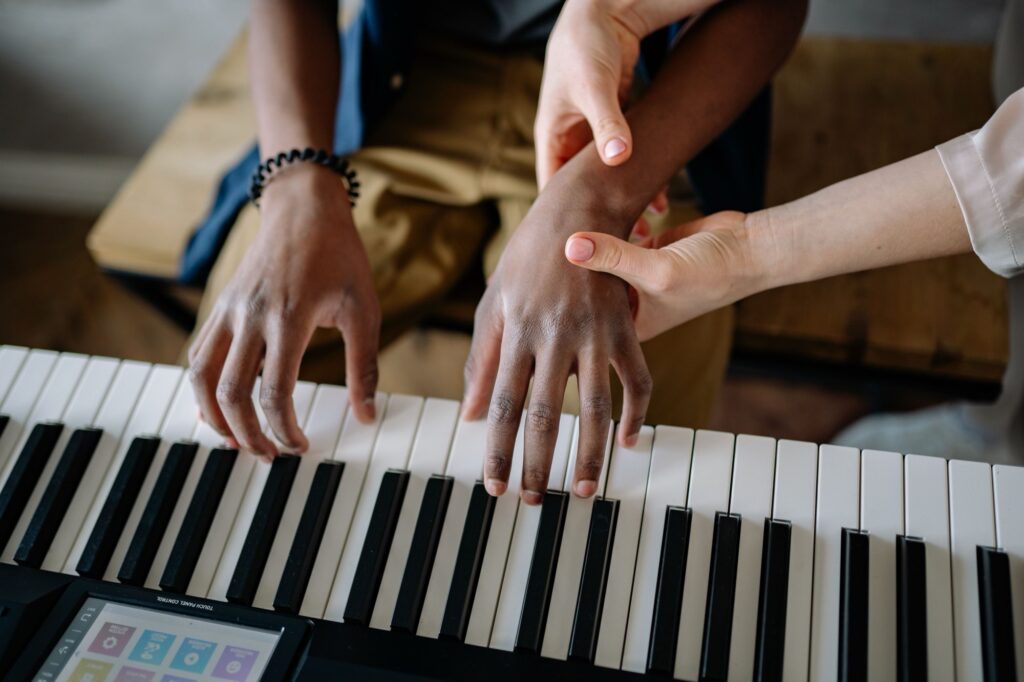
By Alex Watson, BSc (Hons) Occupational Therapy, RCOT, BAHT, Clinical Specialist Hand Therapist at Mint Wellbeing, Wimbledon, South West London
In short: Hand therapy helps musicians address pain, stiffness, numbness, tendon problems and loss of dexterity that interfere with playing. A specialist assessment looks beyond the injured structure at how your hand meets your instrument, then rebuilds the strength, control and endurance your playing actually demands. Assessing symptoms early usually gives the best results.
For a musician, the hands are not just part of the body. They are part of the instrument.
As a pianist preparing for a recital, a guitarist playing several nights a week, a session musician moving between London studios, or a semi-professional balancing rehearsals with another career, small changes in the hands can have a surprisingly large effect on the way you play.
Pain is only one part of the picture. Stiffness, fatigue, weakness, numbness, pins and needles, reduced finger independence or a finger that catches mid-movement can all interfere with technique long before they trouble you anywhere else. At Mint Wellbeing in Wimbledon, specialist hand therapy considers how your hands interact with your instrument, your technique and the physical demands of playing, so we can get you back to performing comfortably.
Why musicians place unique demands on their hands
Hand therapists often place musicians in the same category as elite athletes. Where the athlete trains and relies on the whole body, the musician refines and trains the hands, wrists and upper limbs, asking an extraordinary amount from relatively small muscles, tendons, joints and nerves. A pianist may perform thousands of highly controlled finger movements in a single practice session. A guitarist repeatedly combines fretting pressure, finger separation and wrist positioning through rapid transitions. These movements are deeply practised, but they are also highly repetitive.
The challenge is that very small physical changes show up at the instrument long before they appear in everyday life. You may type, cook and carry shopping without a second thought, yet notice that a particular chord shape feels awkward, an octave passage tires you out, or one finger no longer responds as cleanly as it used to.
Hand therapy that works with your instrument
A musician’s rehabilitation should not stop at making the hand comfortable for daily tasks. The goal is to help the hand meet the specific demands of playing. That means looking at finger position, wrist posture, thumb movement, grip and key pressure, finger independence, endurance, coordination, and the way force travels through the hand and forearm.
For a pianist, we might consider how the fingers move across the keyboard, whether certain fingers are compensating for others, and how the wrist and forearm contribute to demanding passages. For a guitarist, the assessment may focus on fretting pressure, finger span, thumb position and repeated picking or strumming. Refining treatment around the movements you actually need to perform is what makes specialist hand therapy valuable: the instrument becomes part of the rehabilitation, not an afterthought once you have been discharged.
The undervalued muscles: your interossei
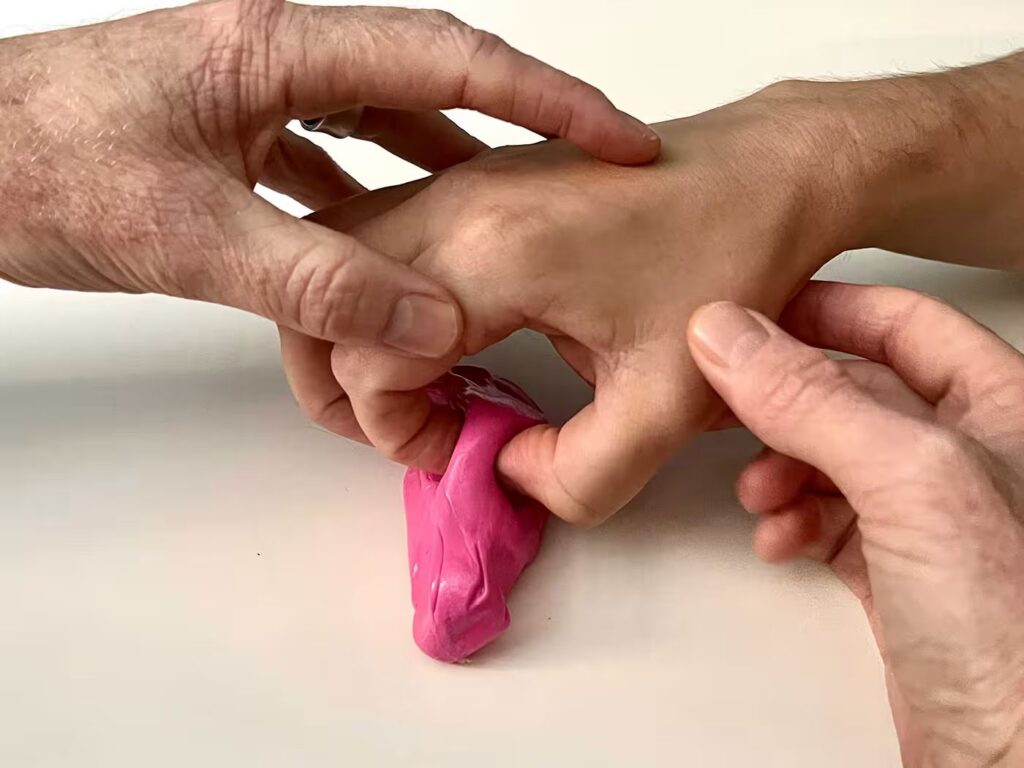
There is a group of small muscles within the hand that give it much of its elegance, dexterity and versatility. They are called the interossei, and they help spread the fingers apart, draw them together and stabilise them during precise movements. For musicians, they can be placed under considerable demand. A pianist may feel discomfort reaching for wider intervals or controlling particular finger combinations; a guitarist may notice pain stretching across frets or holding complex chord shapes.
An interossei sprain or irritation can show up as localised pain between the metacarpals, weakness, discomfort when spreading the fingers, or difficulty with movements that once felt effortless. Therapy involves identifying which structures are irritated, easing the load temporarily, restoring movement and gradually rebuilding strength and endurance. The aim is not simply a stronger muscle, but the right amount of strength and control for your particular playing demands.
Common hand complaints in musicians
Numbness and pins and needles
Numbness and pins and needles should not simply be accepted as part of being a musician. These symptoms often relate to irritation or compression of a nerve, and the details matter: which fingers are affected, where the altered sensation sits, and which positions provoke it. Symptoms might appear when the wrist is held a certain way on the instrument, sometimes off the instrument, and in some cases sleeping positions at night can contribute. A thorough assessment considers the hand, wrist and whole upper limb alongside your playing positions, and treatment may include changes to positioning, nerve management strategies, splinting, exercises and adjustments to playing load.
Please note: persistent numbness, worsening weakness or a significant change in hand function should be medically reviewed.
Tendinopathies and overuse injuries
Tendons transfer force from muscle to bone, allowing the controlled movements playing requires. Repeated loading is normal and necessary, but problems arise when the amount or intensity of playing outpaces what the tissues can currently tolerate. This often follows an increase in rehearsals, preparation for an audition or concert, a change in repertoire, a return after time off, or simply too much load without enough recovery.
Complete rest is rarely the most useful answer. A hand therapist works with you to establish how much playing is appropriate right now, then progressively rebuilds your capacity by adjusting practice duration, redistributing demanding passages, introducing targeted exercises and increasing playing time as symptoms settle and tolerance improves. The goal is load management, not an open-ended instruction to stop.
Trigger finger
Trigger finger is especially frustrating for musicians, because smooth, predictable finger movement is essential. Symptoms can include clicking, catching or locking of a finger or thumb. Some people notice stiffness first thing in the morning; others feel discomfort in the palm at the base of the affected finger. Even mild triggering can undermine confidence and timing.
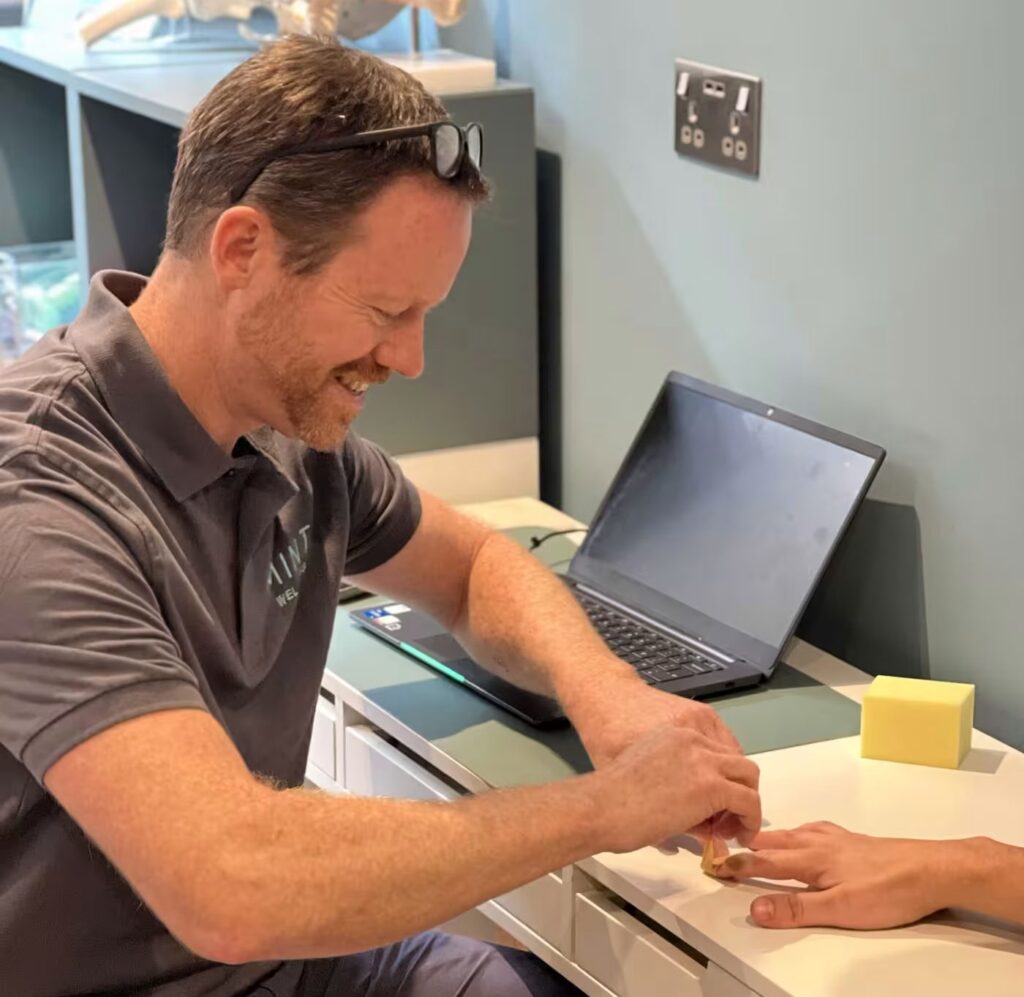
Treatment can include education around tendon loading, activity modification, exercises and, where appropriate, a custom thermoplastic splint made on site to rest or support the finger. Your therapist can also help judge when further medical assessment or other options should be considered. The priority is managing the condition without needlessly removing music from your life.
Focal dystonia
Focal dystonia in musicians, often called musician’s dystonia or musician’s cramp, is a neurological movement disorder in which specific, highly practised movements trigger involuntary muscle contractions. It may cause abnormal finger postures, loss of independent finger control, stiffness, tremor or unwanted movements while playing, even though everyday hand function may remain relatively normal.
Hand therapy can help musicians adapt and regain control through individualised exercises, sensory retraining, ergonomic and technique changes, graded practice, and strategies to reduce excessive muscle activation. Treatment is usually most effective when coordinated with a neurologist and a therapist experienced in musicians’ disorders.
Bringing your instrument into therapy
Where practical, using your instrument during assessment provides information a standard clinical exercise cannot. The movement causing trouble is often hard to reproduce on demand, and watching you play can reveal differences in wrist position, finger loading, movement strategy or endurance that only surface in performance. For larger instruments like the piano, video helps: recording the relevant passage from a good angle shows your therapist exactly when symptoms appear. For guitars and other portable instruments, bringing them to the appointment lets specific positions be assessed directly.
Returning to playing after an injury
Returning to music after a hand or wrist injury should be progressive. Going from very little playing straight into several hours of rehearsal can overload tissues that have not yet rebuilt their capacity. A return-to-playing programme gradually increases duration, complexity, speed and intensity, usually introducing easier technical work before the most demanding repertoire. It also has to reflect the realities of a working musician: rehearsals, recording sessions, teaching, auditions and performances that cannot simply be ignored. Good therapy plans around those commitments and finds where load can realistically be reduced without derailing a career.
Rehabilitation versus refinement
One of the most interesting aspects of hand therapy for professional musicians is how detailed rehabilitation can become. A player may pass every clinical strength test and still know that something is not quite right. Perhaps the fourth finger feels slower. Perhaps repeated octaves bring on fatigue. Perhaps a barre chord that used to be comfortable now takes noticeably more effort. Perhaps the hand feels fine for twenty minutes, then complains after a ninety-minute rehearsal.
These details are the work. Therapy can progress from restoring basic movement and strength toward refining endurance, dexterity, coordination and load tolerance. Rehabilitation becomes a conversation between three things: the musician, the hand and the instrument.
When should a musician see a hand therapist?
Consider a hand therapy assessment if you have persistent hand or wrist pain, trigger finger, finger stiffness, reduced grip or finger strength, numbness, pins and needles, tendon pain, or a noticeable loss of dexterity when playing. You do not have to wait until symptoms stop you playing altogether. Early review is particularly useful when you notice subtle changes in technique, endurance or control, the little changes that can matter a great deal to a musician even while everyday hand function feels normal.
Frequently asked questions
Should I stop playing if my hand hurts?
Usually not completely. Complete rest is rarely the most useful answer for a musician. The better approach is load management: working out how much playing is appropriate now, then rebuilding capacity gradually. An assessment helps set that level for your specific situation.
How do I know if I need to see a hand therapist?
Persistent pain, trigger finger, numbness or pins and needles, reduced grip or finger strength, or a loss of dexterity when playing are all good reasons. You do not need to wait until symptoms stop you playing. Subtle changes in technique, endurance or control are worth assessing early.
Can hand therapy help musician’s dystonia?
Yes. Hand therapy can help musicians adapt and regain control through individualised exercises, sensory retraining, technique and ergonomic changes, and graded practice. It works best when coordinated with a neurologist and a therapist experienced in musicians’ disorders.
Do you make splints for trigger finger?
Yes. Where a splint is appropriate, a custom thermoplastic splint can be made on site to rest or support the affected finger, alongside advice on tendon loading, activity modification and exercises.
Should I bring my instrument to the appointment?
Where practical, yes. Watching you play reveals things a standard clinical test cannot. For portable instruments, bring them along. For a piano, a video of the passage that causes trouble, filmed from a good angle, shows exactly when symptoms appear.
Noticed a change in how your hands meet your instrument?
It is worth having it assessed early. Our specialist hand therapy team at Mint Wellbeing in Wimbledon can help you find a practical route back to comfortable, confident playing.
Book an assessment or call us on 020 8987 8026.
About the author
Alex Watson is an occupational therapist and clinical specialist hand therapist with 14 years of experience, working with musicians to bridge the gap between clinical recovery and confident performance. The clinic is fully equipped for the full range of hand therapy needs, including custom thermoplastic splints made on site, and hand therapy works alongside an experienced physiotherapy team, since the shoulder, neck, back and even the hip can all influence how the hand and wrist perform.
This article is for general information and is not a substitute for individual medical advice. If you are concerned about your symptoms, please speak with a qualified healthcare professional. Book an appointment